Showing posts with label islamic books in urdu free download. Show all posts

Friday, June 20, 2014

Ramadan For New Muslims

Fasting the lunar month of Ramadan is such an important Pillar of Islam that Muslims believe that if one dies without having made up the missed fasts, the guardian (or heir) must make them up, for they are a debt owed to Allah. The Prophet Muhammad (peace and blessings be upon him) said: 

 “Whoever observes fasts during the month of Ramadan out of sincere faith and hoping to attain Allah's rewards then all his past sins will be forgiven.” (Al-Bukhari) 

Muslims believe that the influence of the devils on the believers who obey Allah is diminished. Prophet Muhammad (peace be upon him) said: “When the month of Ramadan starts, the gates of the heaven are opened and the gates of Hell are closed and the devils are chained” (Al-Bukhari)

VIEW ONLINE OR GET A FREE COPY IN PDF FORMAT

Thursday, June 12, 2014

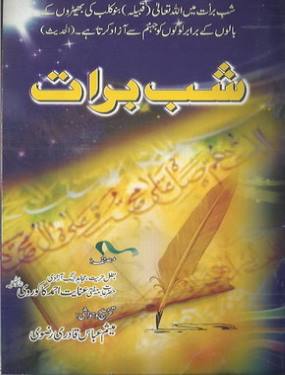
Shab-e-Barat by Mufti Inayat Ahmed r.a

Mid-Sha'ban is the 15th day of the eighth month (shaaban) of the Islamic lunar calendar. The preceding night is known as Laylatul Bara’ah or Laylatun Nisfe min Sha’ban in the Arab world, and as Shab-e-barat (شب برات) in Afghanistan, Iran, Bangladesh, Pakistan, and India.

VIEW ONLINE OR GET A FREE COPY IN PDF FORMAT


Friday, June 6, 2014

Seerat-e-Pak Hazrat Rabia Basri r.a

Hazrat Rabi’a al-Adawiyya al-Qaysiyya (ra) also known as Rabi’ah al-Basri was a Sufi saint from Iraq and is considered to be the first female Sufi Saint of Islam, the first in a long line of female Sufi mystics. She lived during the 8th Century and was born in Basra, a seaport in southern Iraq where she spent the vast majority of her life. Much of her early life is narrated by Hazrat Farid al-Din Attar (ra), a later Sufi saint and poet, who used earlier sources. She did not leave any written works herself.

Hazrat Rabia Basri (ra) is remembered to this day as one of the greatest saints of the 8th century and is remembered with devotion and affection for her faith, piety and patience. The great woman mystic, saint and Qalandar of Islam had conquered herself (Nafs) through devotion, meditation, contemplation, patience (Sabr) as well as fear and trust in God. (Tawwakul). Hazrat Rabia Basri (ra) was constantly absorbed in the thought of God and had reached the pinnacle of mystic path i.e Fina-Fillah.

VIEW ONLINE OR GET A FREE COPY IN PDF FORMAT

Monday, June 2, 2014

Ahkam e Shaban o Shabe Baraat Tahqiq ke Ainey Main by Molana Mufti Muhammad Shoaib

Sha'aban (Arabic: شعبان) is the eighth month of the Islamic calendar.

This is the month of ‘separation’, so called because the pagan Arabs used to disperse in search of water.

On the fifteenth night of this month falls the Shab-i-Barat: ‘The Night of Records’; on this night the prophet Muhammad told his followers that Allah records all the deeds that the humans have to perform for the next year.

Mother of the believers, Sayidatuna A’isha (May Allah be pleased with her) says, I missed the Prophet (Swall Allau Alaihi Wasallam) one night so I went out to al-Baqi’ (graveyard, and found him). He said: “Were you afraid that Allah would wrong” I said: “O Messenger of Allah, I thought that you might have gone to visit one of your [other] wives.” He said: “Allah Glorious and Exalted descends to the nearest heaven on the night of mid-Shabaan (15th night) and He forgives more people than the number of hair on the hides of the flocks and herds of sheep of the tribe of Kalb. {Tirmidhi} 

It is recorded in books that the tribe of Kalb used to have the most number of sheep in Arabia, but some unfortunate people are still not forgiven on this night when Allah showers His mercy on mankind. Amongst them are 
1) those who are habitual drinkers [alcoholics] 
2) those who are habitual adulterous 
3) those who are disobedient to their parents 
4) those who break family ties 
5) those who are mischief-spreaders and, 
6) those who are back-bitters. 

In another narration mischief-spreader is replaced with those who make pictures. {Mukashifatul Quloob}. In other narrations those who practice magic, those who eat interest, those who lower their pants below their ankles with pride, those who start a fight between two Muslims, those who bear malice (have hatred for another Muslim) in their hearts without a lawful cause are also not forgiven on this blessed night unless they repent sincerely and also ask for forgiveness from fellow Muslims and make peace.

VIEW ONLINE OR GET A FREE COPY IN PDF FORMAT


Gham Na Karain by Dr. Ayz ul Qarni


VIEW ONLINE OR GET A FREE COPY IN PDF FORMAT

Monday, May 12, 2014

Ahkam-e-Shaaban O Shab Barat Tahqeeq Key Ayne Mai by Molana Mufti Shoaib

Sha'aban (Arabic: شعبان) is the eighth month of the Islamic calendar. This is the month of ‘separation’, so called because the pagan Arabs used to disperse in search of water. On the fifteenth night of this month falls the Shab-i-Barat: ‘The Night of Records’; some people think that on this night the prophet Muhammad told his followers that Allah records all the deeds that the humans have to perform for the next year.

The Islamic calendar is a lunar calendar, and months begin when the first crescent of a new moon is sighted. Since the Islamic lunar calendar year is 11 to 12 days shorter than the solar year, Sha'aban migrates throughout the seasons.


VIEW ONLINE OR GET A FREE COPY IN PDF FORMAT


Wednesday, May 7, 2014

Islam Mai Ghurbat Ka Ilaj by Prof Yousuf Alqarzawi

Islamic teachings provide different programmes of poverty alleviation and social security. Zakat is system of social security in Islam. Literal meaning of Zakat is purification and growth, it purifies wealth of the payer and also it causes to grow. 

The Holy Qur’an says: 

“Take alms of their wealth wherewith thou mayst purify them and make them grow.”(9:103) Payment of Zakat is an essential component of faith: “But if they repent and establish worship and pay the poor-due, then they are your brethren in religion.” (9:11) “Successful indeed are the believers who are humble in their prayers and who shun vain conversation and who are payers of the Zakat.”(23:4):  

Zakat is one of the five fundamental tenets of Islam and the most important part of Islamic fiscal system. State is duty bound to organize collection and disbursement of Zakat money. The Holy Qur’an says: [box] “(Muslims are) those who, if we give them power in the land, establish the system of (Salah) prayers and (Zakat) poor dues and enjoin virtue and forbid evil and inequity.” (22:41)

Zakat is meant to create harmonious social order in which resource-less section of the society is ensured a honourable living. Zakat as a technical term signifies an obligatory transfer of a portion of wealth by a Muslim provided he is the owner of specific and prescribed amount called Nisab. Zakat is chargeable on different assets at different rates. It is chargeable at the rate of 2.5% on the assets of gold, silver, stock in trade, currency notes and other cash assets. On agricultural produce rate is 1/10, however if land is irrigated through artificial means 1/20 is charged. Animals are also subject to payment of Zakat according to their number. Zakat is payable once a year, for agricultural produce it is payable after every harvest season. The Holy Qur’an provides eight heads of disbursement of Zakat fund. 

 i) Poor people without financial resources, those who do not have any kind of resources. 
 ii) The needy, those who have resources but not sufficient to meet their basic needs of life. 
 iii) Workers of Zakat department; 
 iv) Those whose hearts are to be reconciled. Newly converted Muslims and non-Muslims who are inclined towards Islam. (they want to study Islam, and have a desire to know about tenets of Islam); 
 v) To free the captives. That is elimination of slavery in any form, as bonded labour, a kind of modern form of slavery in which poor labourers (including women and children) are kept in captivity till they discharge their financial liabilities created through advance payments made to them, by the owners of business or industry; 
 vi) Poor facing debt liabilities and those facing financial burden caused due to natural disasters as heavy rains, fire and earthquakes, for their rehabilitation and subsistence; 
 vii) The cause of Allah, for defence purposes; and 
 viii) Payments to the wayfarers, not having enough amounts to reach the place of destination for their travel expenses. For savings (cash assets) Nisab has been fixed at 200 dirhams (612.32 grams of silver), for gold at 20 mithqal (about 87 grams), for agricultural produce at 5 wasq (948 kg) (equal to five camel loads) and for animals at 40 goat, 30 cows and 5 camel. Assets less than Nisab limit are not liable to payment of Zakat. Household items as furniture and articles for personal use of the owner are not liable to payment of Zakat. 

Tools buildings, machines and facilities considered a component part of agriculture and industrial concerns are exempt from payment of Zakat. Rate and other conditions of payment (i.e. once a year, 1/40 of savings) are highly equitable, in any way payments do not hurt the rich but its impact in alleviation of poverty is significant. Since it is a permanent and direct transfer of resources from rich to poor, incidence of poverty goes down rapidly. In the initial period of Muslim history when this system was introduced, results were marvellous. Within short period of time results were so encouraging that during the period of Umer II state officials used to make announcements in the streets looking for the needy to provide them assistance from Zakat fund, hardly few people were turning out who needed help from Zakat fund. 

VIEW ONLINE OR GET A FREE COPY IN PDF FORMAT

Monday, May 5, 2014

Sayyedana Ghareeb Nawaz by Molana Muhammad Mehboob Alam Ashrafy

Mo`īnuddīn Chishtī (Urdu/معین الدین چشتی) (Persian: چشتی‎,Urdu: چشتی‎ - Čištī) (Arabic: ششتي‎ - Shishti) was born in 1141 and died in 1236 CE. Also known as Gharīb Nawāz "Benefactor of the Poor" (غریب نواز), he is the most famous Sufi saint of the Chishti Order of the Indian Subcontinent. Moinuddin Chishti introduced and established the order in the subcontinent. The initial spiritual chain or silsila of the Chishti order in India, comprising Moinuddin Chishti, Bakhtiyar Kaki, Baba Farid, Nizamuddin Auliya (each successive person being the disciple of the previous one), constitutes the great Sufi saints of Indian history.

VIEW ONLINE OR GET A FREE COPY IN PDF FORMAT

Thursday, April 24, 2014

Hazrat Abu Bakar K 100 Qisey by Shaikh Muhammad Siddique

Abu Bakr As-Ṣiddīq (real name Abdullah ibn Abi Quhafa) (Arabic: عبد الله بن أبي قحافة, translit.: ʿAbd Allāh ibn Abī Quḥāfah), c. 573 CE – 23 August 634 CE, popularly known by his nickname Abū Bakr was a senior companion (Sahabi) and the father-in-law of the Islamic prophet Muhammad. He ruled over the Rashidun Caliphate from 632–634 CE when he became the first Muslim Caliph. 

As Caliph, Abu Bakr succeeded to the political and administrative functions previously exercised by Muhammad. He was called Al-Siddiq (The Truthful) and was known by that title among later generations of Muslims. As a young man, Abu Bakr became a merchant and he travelled extensively in Arabia and neighbouring lands in the Middle East, through which he gained both wealth and experience. He eventually came to be recognized as the chief of his clan. 

VIEW ONLINE OR GET A FREE COPY IN PDF FORMAT


Seerat-e-Abukar Siddique r.s by Mufti Muhammad Rashid Nizami

Abu Bakr As-Ṣiddīq (real name Abdullah ibn Abi Quhafa) (Arabic: عبد الله بن أبي قحافة, translit.: ʿAbd Allāh ibn Abī Quḥāfah), c. 573 CE – 23 August 634 CE, popularly known by his nickname Abū Bakr was a senior companion (Sahabi) and the father-in-law of the Islamic prophet Muhammad. He ruled over the Rashidun Caliphate from 632–634 CE when he became the first Muslim Caliph. 

As Caliph, Abu Bakr succeeded to the political and administrative functions previously exercised by Muhammad. He was called Al-Siddiq (The Truthful) and was known by that title among later generations of Muslims. As a young man, Abu Bakr became a merchant and he travelled extensively in Arabia and neighbouring lands in the Middle East, through which he gained both wealth and experience. He eventually came to be recognized as the chief of his clan. 

On his return from a business trip to Yemen, he was informed that in his absence Muhammad had openly declared his prophet hood. Not long after, Abu Bakr accepted Islam and was the first person outside the family of Muhammad to openly become a Muslim. He was instrumental in the conversion of many people to the Islamic faith and early in 623, Abu Bakr's daughter Aisha was married to Muhammad, strengthening the ties between the two men.[3] Abu Bakr served as a trusted advisor and close friend to Muhammad. During the lifetime of Muhammad (pbuh), he was involved in several campaigns such as the Battle of Uhud, the Battle of the Trench, the Invasion of Banu Qurayza, Battle of Khaybar, the Conquest of Mecca, the Battle of Hunayn, the Siege of Ta'if, and the Battle of Tabuk where he was reported to have given all of his wealth for the preparation of this expedition.

He also participated in the Treaty of Hudaybiyyah and was made one of the witnesses over the pact. Abu Bakr's Caliphate lasted for a little over two years (or 27 months), ending with his death after an illness. Though the period of his caliphate was not long, it included successful invasions of the two most powerful empires of the time, a remarkable achievement in its own right. He set in motion a historical trajectory that in few decades would lead to one of the largest empires in history.

Read Online this book


Tuesday, April 22, 2014

Khuaja Gharib Nawaz Ajmeri by Molana Mehboob Alam Ashrafi

The life of a Sufi is the "life of a sprit" regulated strictly in accordance with Islamic theology and traditions. to attain this his first lesson is his unshakable belief in the existence of GOD and unconditional surrender to his will. This entails a strenuous life attended by rigid austerity and self-denial. He has to undergo courses of training in prayers and meditation to attain the divine knowledge and realization of truth. This particular knowledge is passed on ‘in secret’ by one Sufi to another having the requisite qualification i.e. one who does not think evil does not see evil and does not speak evil. Without this divine knowledge one, cannot fathom the hidden mysteries of the nature and those of soul. To sum up the whole object of Sufism is t attain the highest spiritual perfection. 

A Sufi will be distinguished from other on account of his detachment from his Parents. Children, Wealth, Power, Position, and Comforts. His ignorance vanishes in the influence of the ‘DIVINE LIGHT’ of the most high, the lord of entire universe. In such an ecstatically devotion there is neither pain nor sorrow for him as he is overwhelmingly to the almighty GOD. Thus a Sufi saint is a spiritual king, far above all temporal kings, disguised in the patched robes of a humble dervish. HAZRAT KHAWAJA GHARIB NAEAZ (R.A) was one of the greatest Sufi saint the world ever knows. His spiritual influence and benedictions have been, and are still a perpetually source of inspiration courage and guidance to the afflicted humanity, irrespective of caste, creed, or religion.

VIEW ONLINE OR GET A FREE COPY IN PDF FORMAT

Thursday, March 27, 2014

Shadi Ki Raat by Abdul Haadi Abdul Khaliq Madani

Learn the complete marriage advices according to Islam in Urdu language. This is a detailed book about marriage compiled in light of Islam. You will find advices for the bride and groom in this book. Since Islam is not only a religion but also a complete way of life, therefore Islam has also taught about marriage because marriage is also Sunnah and Islam tells Muslims to get married in their lives. 

The said book "Shadi Ki Raat" is a great effort of Abdul Hadi Abdul Khaliq Madani, He has spotlighted the Marriage in the light of Islam and collected various Hadiths about Islam, He has described the Islamic Prayers about marriage, the rights of wife and husband.

VIEW ONLINE OR GET A FREE COPY IN PDF FORMAT

Thursday, March 6, 2014

Muntakhab Aam Fahem Aik Hazar Ahadees by Top 3 Ulema

رسول (صلی اللہ علیہ واله وسلم) نے فرمایا، اے عائشہ (رضي اللہ تعالی عنہ)! کیا تم نے کبھی مجھے بری یا گندی زبان میں بات کرتے سنا ؟ یاد رکھو قیامت کے دن وہ لوگ الله کی نظر میں سب سے برے ہوں گے جنھیں لوگ علیحدہ کر دیں یا ان سے کنارہ کر لیں تا کے انکی فحش زبان یا گناہ سے اپنے آپ کومحفوظ رکھ سکیں.

[ بخاری، کتاب الاداب، جلد:73 ]

The Prophet ﷺ said: “O ‘Aaishah (Razi Allah Ta'ala Anhu)! Have you ever seen me speaking a bad and dirty language? (Remember that) the worst people in Allah’s sight on the Day of Resurrection will be those whom the people desert or leave in order to save themselves from their dirty language or from their transgression.

[ Bukhaari, Kitab Al'adaab, Volume:73 ]​